
Elections are only as good as implementation
For most of the last 15 years or so, I've been an election curmudgeon. For the days and weeks following an Election Day, my communities do one of two things: they ride high after a great outcome, reliving the news by rewatching victory speeches and sharing social media content that rubs in the victory against their opponents; or they gather on a giant collective fainting couch, catastrophizing about what's to come, before ultimately asking themselves, How do we keep this from happening next time?
Regardless of the result, the mentality is the same: Elections are considered one-off events, a biannual Super Bowl of values. For the victors, there is a strong sense that Our work here is done. They may not say it in those words, but the collapse in public attention come late November makes it clear that most people think of elections as the finish line. I'm curmudgeonly about this because I'm a jaded bureaucrat who knows that elections are the starting point. They grant permission to do something great, but are not great achievements themselves. And doing something great post-election is not at all a foregone conclusion.
This headline grabbed me today:
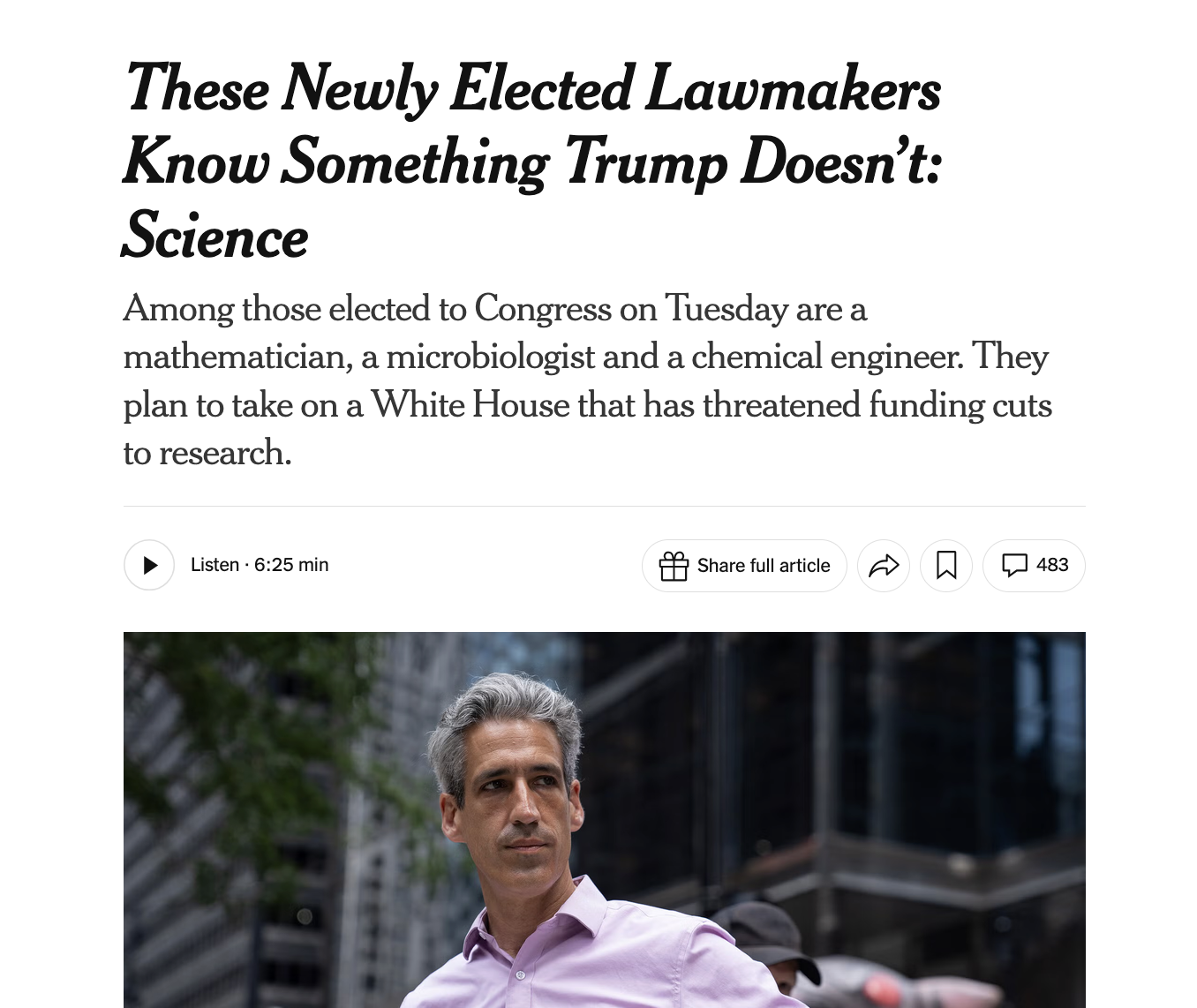
About 20 years ago, one of my hobbyhorses was the lack of scientific expertise in Congress. "We need more scientists in Congress!" I told people. "How do we expect to get better science policy without expertise? The policymaking process will keep ignoring facts if we keep hiring TV personalities and lawyers to do the job!"
I wrote several pieces about this idea, but I think I published none of them, because I wasn't quite sure that I was right: Is it necessarily true that a climate scientist will be better at climate policy than, say, a lawyer who believes the science and knows their way around the regulatory landscape? Or an entrepreneur who understands how to create the right incentives for the commercial sector?
In writing these unpublished essays, I learned that Isaac Newton served two terms in Parliament. It happened the year after he published Principia Mathematica, which I guess made him a celebrity and a household name.
How did the smartest human in history impact policy? While Newton probably did some valuable work during his years of public service, his most well-known contribution was the sole occasion on which he rose during Parliamentary debate, simply to say, "I'm cold, we should close the windows." And although it would be neat if we chose elected officials who were famous for their world-changing discoveries, I was unsure back then whether the results would measure up to my expectations.
Now that I've had three stints in executive-type roles in the federal government in the 20 years hence, I have more clarity about what might keep domain experts from delivering good policy: well-considered legislation is only as good as the federal agencies that implement it.
Implementation is hard. And not enough attention is paid to it. If the American electorate sees elections as the finish line, then policy makers have a similar view of a bill signing ceremony.
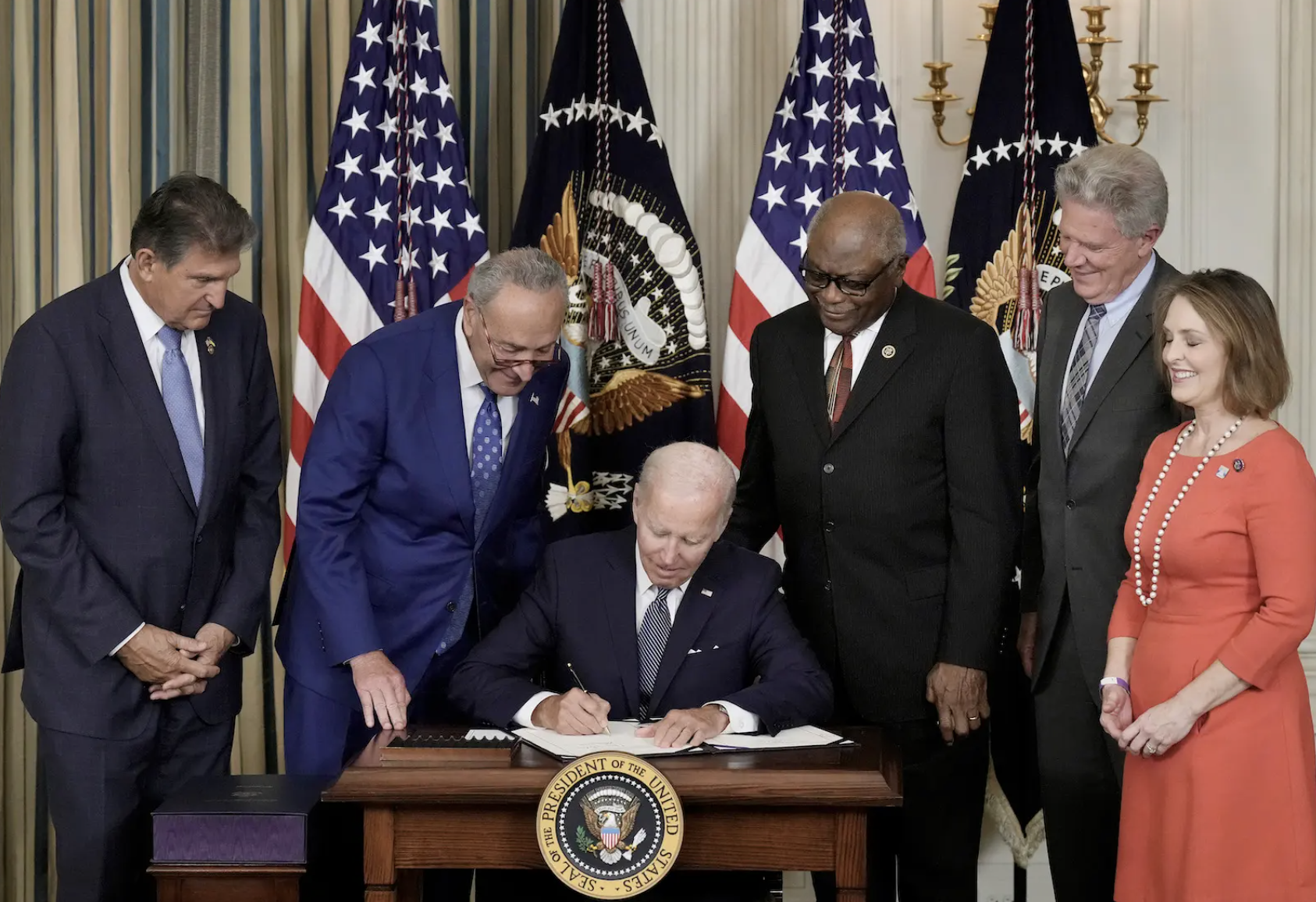
Implementation is how legislation gets realized. The legislation doesn't simply say "More money for science/climate/whatever research!" It says, "So-and-so agency must build a program that disburses this money/enforces this law/operates this system in such-and-such fashion, under the following rules..." A few things about policy implementation make it difficult (these are just the big ones that I've seen from my vantage point; I'm sure there are many more):
- Because this is law, disbursing money in ways other than prescribed in the legislation constitutes a violation of law. Agency staff really, really don't want to break the law (I know this may be surprising to many who see government only from the outside), so there are many internal processes to watch over the programs to make sure they're following the law. This slows things down.
- Because this work is funded by tax dollars, there are additional internal processes that require work to be thoroughly documented to show that we're safeguarding tax dollars against waste and fraud. Often, it seems like the time spent documenting the work is greater than the work itself. This applies not just to policy programs, but day-to-day operations as well. Just filling out all the forms required for official travel can sometimes cost more money (in the form of time spent) than the travel itself. This slows things down even more.
- Because of all the things slowing down the work, full implementation can take longer than an election cycle. So by the time the law is about to really deliver for the public, new leaders come in and dismantle or defund the program (after arguing on the campaign trail that the program is bad and wasteful).
Which takes me back to Congress's new scientists. Restoring science funding to its previous levels could be a goal. But now that the institutional infrastructure that used to manage that funding has been gutted, simply restoring the funding won't suffice. We need policy that rebuilds that infrastructure, because apparently, that infrastructure didn't work all that well:
(H)ow much time do scientists spend on administrative issues as opposed to doing science? This is something that has been carefully studied by the Federal Demonstration Partnership. They have conducted well-designed surveys, starting in 2005, then every six or seven years. They showed the same thing: scientists are spending about 45% of their time related to federally-funded research addressing administrative requirements, not doing science.
There’s no way that you’re going to be able to completely eliminate administrative requirements. The administration is important and it has to be done properly. But when people are spending 45% of their time handling paperwork and only 55% doing science, you’ve got a big problem.
The people who now have the opportunity to undo the destruction of the past two years need more than domain expertise. They need to understand how the federal bureaucracy works, and why it doesn't. I believe this is even more important than restoring funding, because the funding will come and go over the years. It is a faucet that is routinely open and shut after elections. This is a fact of life in a multi-party democracy. In general, we probably lose too much sleep fretting over it. Instead, we ought to be fretting over how ineffective our dollars are when the spigot is open.
I say this not to cast doubt on the ability of new Members of Congress to get this job done, but to highlight the full scope of the challenge. That full scope is invisible not just to the general public, but to many longtime Members of Congress as well. Of the 535 incoming members of the 120th Congress, about 55 have prior experience in non-elected public service.
I've worked at a new federal agency, helping build it from scratch. It's extraordinarily difficult and exhausting. And now we have to rebuild many existing ones from an almost similar state. It's daunting. I also think it's a huge opportunity that we won't get again: this election has sent a message that Americans want their government to work, and that they want leaders to do what it takes to fix it. That fix will require lots of political capital: it will require changing the way the federal government hires staff, manages people, and fires them; hires and works with vendors; moves money and data between agencies; and oversees its performance. Upsetting the status quo will make many people unhappy, and this is why it hasn't happened in the past: the voices supporting the status quo were much stronger than those who wanted reform.
This is why the incoming Congress needs to start planning now. Maybe they won't accomplish much with a White House still run by people who want to deliberately traumatize public servants, but 2029 is very close, and Americans have short memories. Voters will eventually forget about the last two years, and the political will to build a better government will dry up. When that happens, a new White House will opt for fast, tangible, headline-earning initiatives over the arcane work of building effective government institutions. Which is why the groundwork has to be laid now, as soon as possible, so that not a day is wasted.
What does that groundwork look like? I'm trying hard to write more, and so I'm planning to focus on this question in the coming months.
Member discussion