
Introducing Expert Mode
I know it's been a long time since my last letter. Years, in fact. I've had two preoccupations:
- My job at the US Treasury, overseeing the IRS's efforts to modernize their IT enterprise
- Writing a book
I left Treasury over a year ago, but that work bled into a research fellowship at NYU Law School's Tax Law Center, who hired me to write a set of recommendations for future IRS leaders. (I recently finished that project; whether and when my paper is published is not up to me.)
As for the second, this is why I'm writing to you now. I've been working in government technology most of my career, and I think that I've experienced it long enough and from enough perspectives to feel like I could fill a book with the lessons I've learned. But I can be honest about the average person's appetite for long non-fiction tomes about IT enterprise governance: it's, shall we say, less than my own.
That's why I'm writing this book in the form of a novel, inspired by The Goal, one of my favorite books. If you like systems and haven't read The Goal, you should.
I'm calling this book Expert Mode, inspired by my friend Dan, who once compared the job of federal IT to playing a video game on expert mode: the system throws every obstacle in your way, making you feel as though you're set up to fail.
I'm going to start releasing this book in serial, via this newsletter. I'll release new chapters every few weeks. If you are subscribed, you will receive it automatically. I hope you like it.
I also recently published an article in Vital City, a cool NYC-based publication that toes the line between magazine and journal. If you're the kind of person who would read The Goal, I think you might like Vital City as well. I think there's insufficient public commentary on the root causes of civic problems, or analysis of which policies work and which ones don't. Those conversations tend to happen only in academic journals, where the language is stuffy and too dense for the average person to consume. Vital City makes policy approachable. Take a look at it.
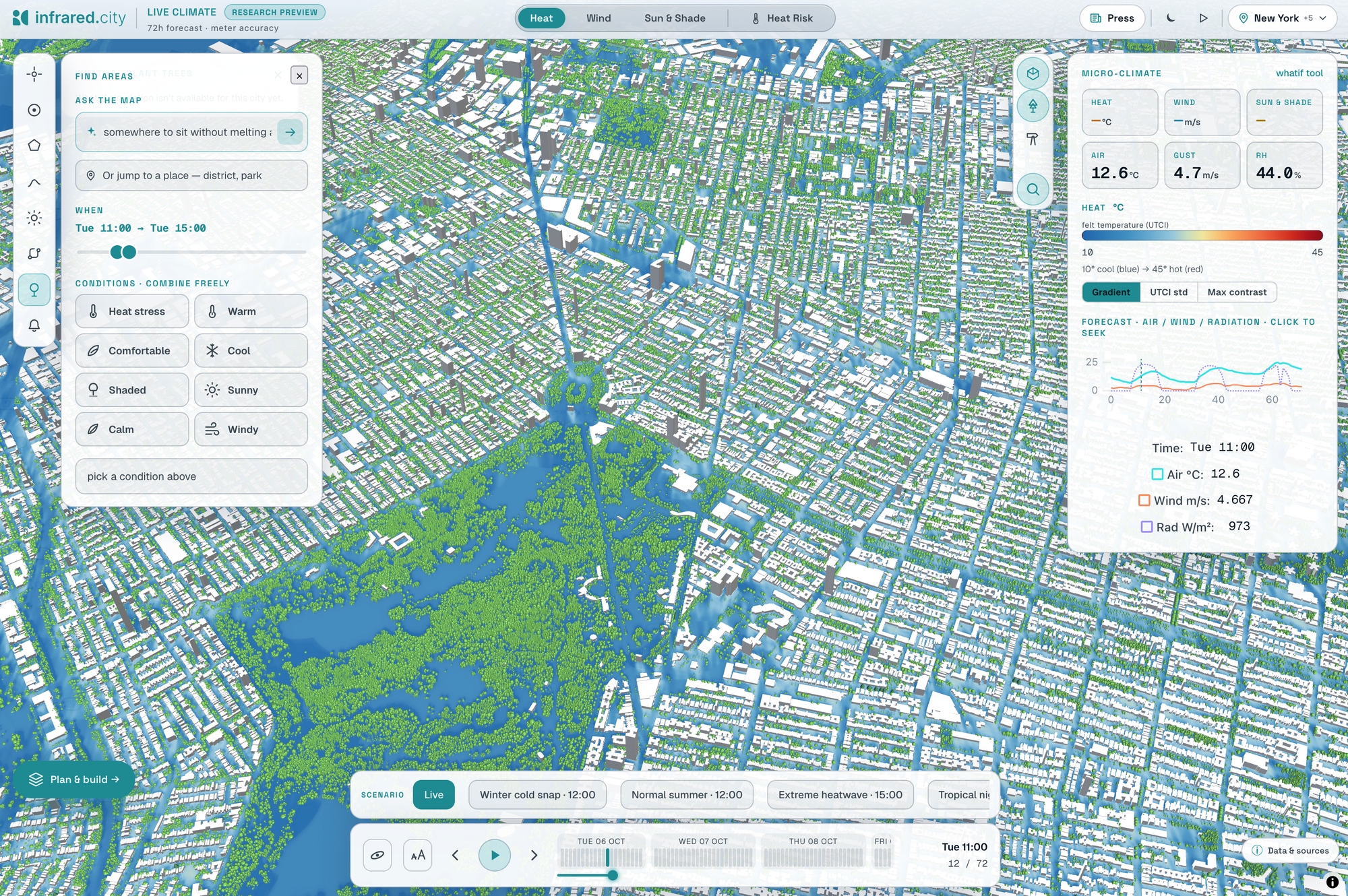
New York City just hosted its annual Climate Week gathering, which unfortunately always happens during NYC's best weather of the year, after our vicious heat island effect has subsided. If you live in a dense city, you've probably noticed that your neighborhood doesn't quite cool down at night after a hot day. The weather forecast might say it's 68 outside, but it sure feels hotter. That's because you're surrounded by surfaces—namely asphalt, concrete, brick, and steel—that absorb solar energy all day, reach over 140 degrees, and then emanate that heat at night, like an oven that's been left open. In NYC, the effect increases the ambient temperature over 8 degrees. And if global leaders are going to convene in this city to learn about solutions to this problem and make decisions about implementing those solutions, forcing them to experience the problem might be a nice motivator.
This cool mapping tool was announced during Climate Week. It lets you simulate different heat and weather scenarios on a block-by-block basis, with considerations for the elements that radiate and insulate heat.
Thanks for reading, and thanks for being patient with me.
Member discussion